The Road to 100 Stars
The story of how I got Transmute from zero to 100 GitHub stars in just over a month.
I’m writing this at 98 stars, so by the time you read it there is a decent chance Transmute has already crossed 100.
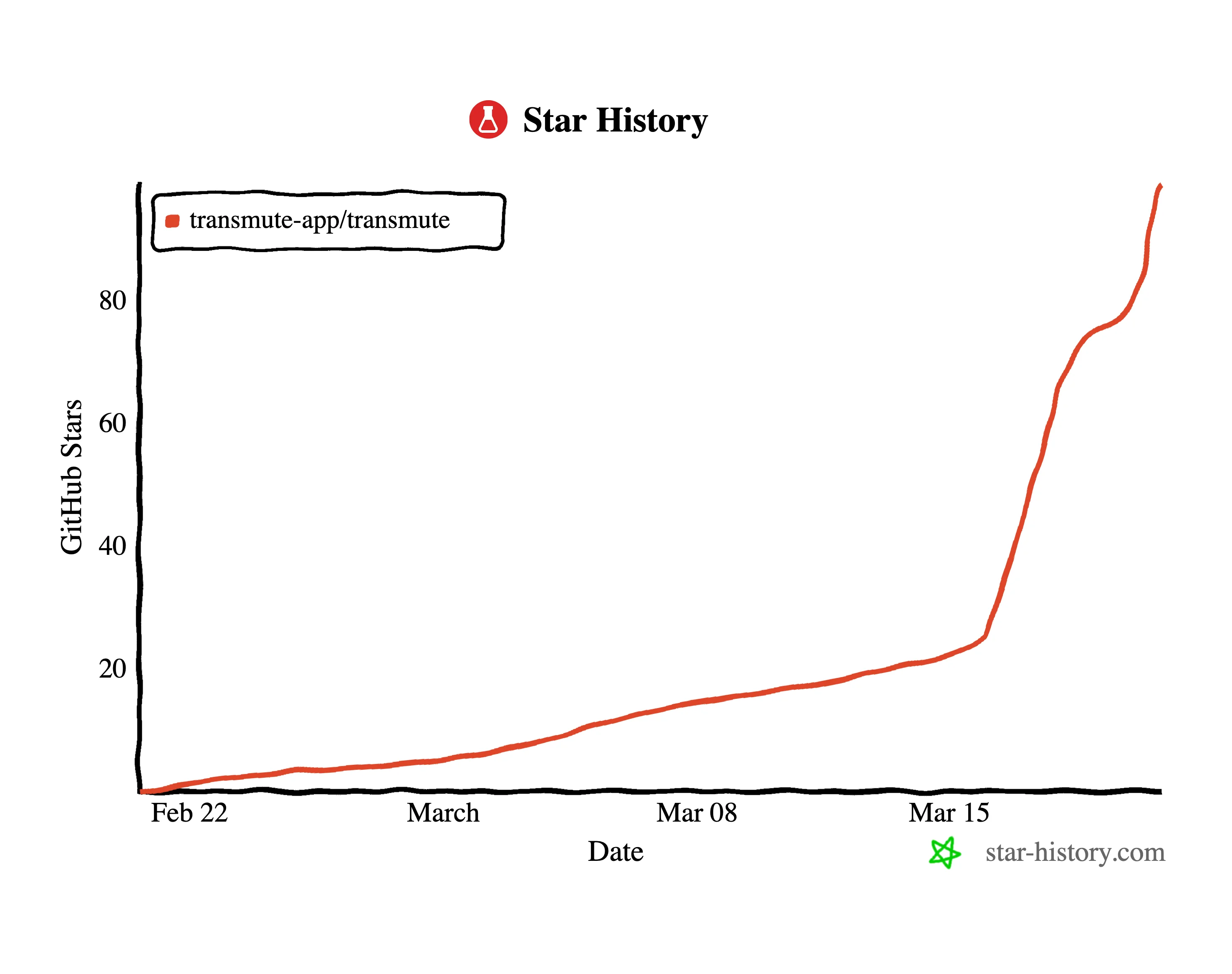
I’ve been steadily working on this app for a little over a month now, with the first real MVP release going out after about two weeks. Hitting 100 GitHub stars is not some massive startup milestone, but for a new open source project, especially one built from scratch without an existing audience, it does feel like an important checkpoint. It means people are finding it, trying it, and deciding it is worth bookmarking.
A lot of advice around growing open source projects is either too generic or comes from people who already had distribution. This is what actually worked for me with no existing followers.
1. Close Tech Friends First
This was the first step, and honestly, I think it matters more than people want to admit.
I shared Transmute with close friends in tech for two reasons. First, feedback. Second, some free stars. Getting your first 10 stars was the hardest part in my experience. Before that, your project looks completely unproven. Even if the code is solid, an empty repo with zero attention feels dead on arrival to most people.
Those early shares helped me get basic feedback, catch rough edges, and make the repo look a little less deserted (yes that actually matters!) People are far more willing to check something out when it feels like at least a few others already have.
If that feels like cheating, I do not really care. Nobody wants to be the first person to trust a brand new tool unless they know you personally or have a very strong reason to care.
2. Create Good First Issues
This was probably the most effective thing I did early on.
I have written about this on Reddit before, but good first issues brought in early contributors, and those contributors brought in activity, discussion, fixes, and more attention. That was a huge part of getting Transmute to the first 20 or so stars, along with around 10 real contributors.
This works because open source projects with visible contributor activity feel alive. A repo with issues being opened, discussed, and closed looks healthier than one where the maintainer is just pushing commits alone in silence.
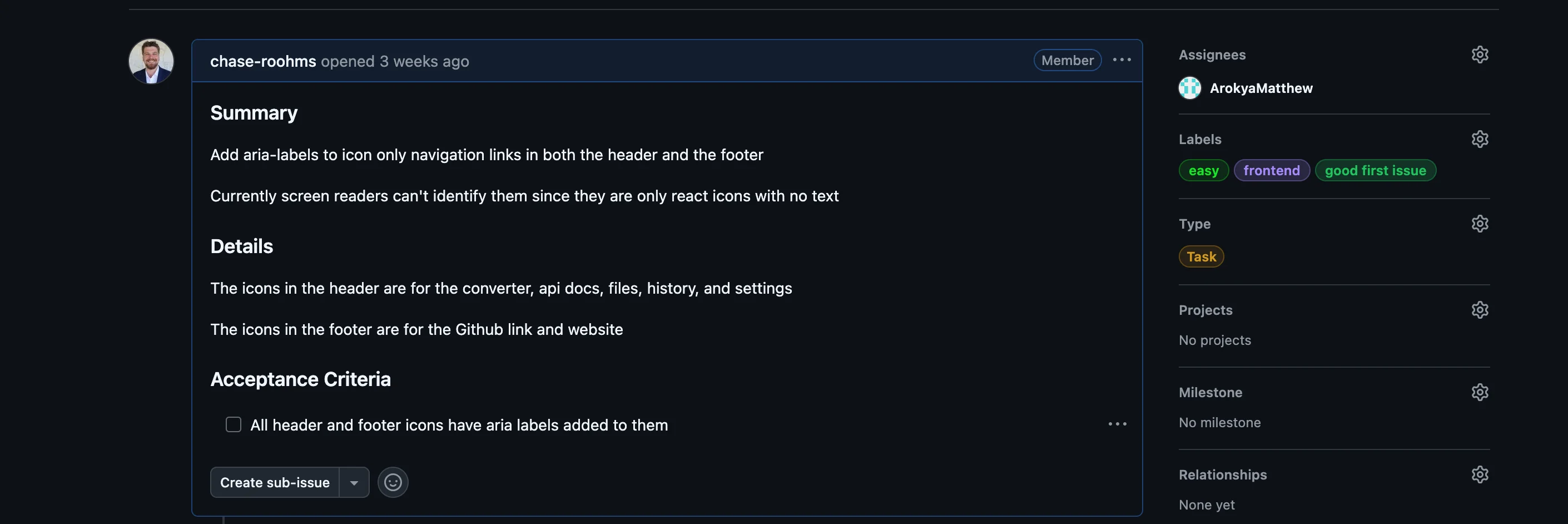
You do have to make the issues actually good though. A lot of so-called good first issues are either too vague, too annoying, or secretly require a full understanding of the codebase. The ones that worked best for me were small, self-contained, and easy to explain. A new contributor should be able to read the issue, find the relevant files, and make progress without reverse engineering the whole app.
That early contributor momentum mattered a lot more than I expected. Here you can find the actual closed good first issues in my repository.
3. One Good LinkedIn Post
Not ten. One. Maybe two.
LinkedIn is not where I would build a long-term audience for something like this, but it was useful for getting attention from peers, coworkers, and people already in my general orbit. Those people are also more likely to be kind, curious, and willing to throw you a star even if they are not personally going to self-host your app that night.
For me, this helped push the project to around 30 stars.
The key is to not be spammy. If every minor update becomes a big self-promotional post, people tune you out fast. But if you make one solid post when the project is starting to look real, it can absolutely help.
At this stage, you are still mostly gathering social proof. You are trying to make the project look active, credible, and worth checking out.
4. Niche Subreddits, Not Giant Ones
This was the biggest jump by far.
People love to say “post it on Reddit,” which is technically true but also way too broad to be useful. Dumping your new app into a giant subreddit with hundreds of thousands of weekly visitors usually does not help much. The feedback is harsher, the audience is less targeted, and a brand new project gets torn apart a lot faster than it gets adopted.
What worked for me was finding a niche subreddit where Transmute directly solved a problem people there already cared about.
For me, that was r/DigitalEscapeTools. It only has about 28k monthly visitors, which is tiny compared to the massive tech subreddits people usually chase. But the engagement was extremely high because the fit was strong. Transmute is a self-hosted, open source file converter that avoids the whole “upload your files to some random third-party server” model. That community is explicitly interested in privacy-respecting, open source, self-hosted tools. It matched almost perfectly.
That one post took me to roughly 75 stars, which was a huge jump.
That experience made something very clear to me. Relevance beats raw audience size. A small group of people who actually care about your problem is far more valuable than a huge crowd that barely does.
5. Get Lucky
The last stretch required some luck.
I was lucky enough that two specific accounts found the project and shared it. One was a Japanese blog post, and the other was a Chinese Twitter post. That outside attention is what finally pushed Transmute over the 100 star line.
I do not want to pretend this was some perfectly repeatable growth strategy. There was definitely luck involved. But I do think you can make that luck easier to happen by having a project that is polished enough to share, a landing page or repo that makes sense quickly, and enough existing traction that people feel comfortable featuring it.
One thing that helped here was checking the repo Insights tab, especially the Traffic page, to see where visitors were actually coming from. That let me spot who had picked it up and understand what was driving the final push.
At some point, growth becomes less about your direct posts and more about whether other people decide your project is worth showing to their audience.
What Actually Got Me To 100
Looking back, getting to 100 stars was not about one viral post or one genius tactic. It was more like stacking small wins in the right order.
First, get stars and feedback from people who already know you. Then make the repo look active with real contributor-friendly issues. Then do a little bit of targeted promotion where the audience actually matches the product. After that, if you are lucky, someone else picks it up and gives it a bigger push.
The early steps might feel a little artificial. That is fine. Early on, you are trying to build enough credibility that strangers do not feel like they are walking into an empty room. Open source projects have the same problem as any other product. Nobody wants to be the first customer. They want some proof that the thing works, that somebody cares about it, and that it is going somewhere.
That is really what the first 100 stars meant for me. Not popularity, just proof.
And now to figure out how to get to 500.